Published September 22, 2026
Many licensed centres in Chilliwack, including ours, ask families to send all food from home. It keeps allergies manageable, it lets each family feed their child the way they choose, and it keeps fees lower. It also means a parent is packing two snacks and a lunch five days a week. Here is how to make that easy and safe.
What a day of food looks like
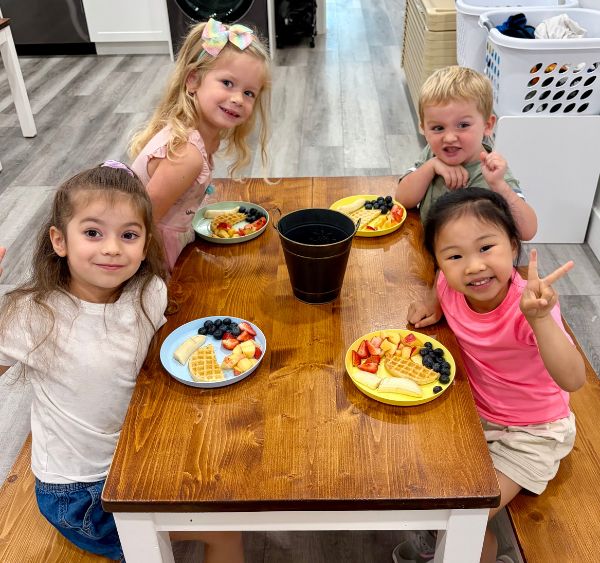
A full day of care usually includes a mid-morning snack, lunch around noon, and an afternoon snack. Three- to five-year-olds eat small amounts often, so think of it as three modest meals rather than one large lunch and two treats. Children in the same room eat together, so what you pack is also what your child sees other children eating.
A simple formula
You do not need recipes. For lunch, aim for one item from each group:
- Something filling: a small sandwich, pasta, rice, a wrap, leftover dinner
- A vegetable or fruit: cucumber sticks, berries, an orange in segments, cherry tomatoes halved
- A protein: cheese, hummus, beans, egg, yogurt, shredded chicken
- Water in a bottle your child can open
Snacks can be smaller versions of the same idea: crackers and cheese, apple slices and yogurt, a muffin and fruit. Canada’s Food Guide is a good reference and does not require anything fancy.
Choking hazards to avoid or modify
Preschoolers are still learning to chew and swallow carefully, and they eat while talking and laughing. Health Canada and the Canadian Paediatric Society list foods that cause choking in young children. In a group setting, where one educator is watching eight children, it is safer to leave these out or prepare them differently:
- Whole grapes and cherry tomatoes: cut in quarters lengthwise
- Hot dogs and sausages: cut lengthwise, then into small pieces
- Hard raw vegetables such as carrot sticks: grate or cook until soft
- Whole nuts, seeds, popcorn and hard candies: leave out entirely
- Large chunks of meat or cheese: cut small
- Spoonfuls of nut or seed butter: spread thinly, if the centre allows it at all
Allergies: ask before you pack
Every licensed centre has an allergy procedure, and it changes when a child with a severe allergy enrols. Ask what is currently restricted. Common restrictions are peanuts and tree nuts, and sometimes eggs or sesame. Sunflower-seed butter and soy butter are the usual substitutes. If your own child has an allergy, the centre needs it in writing, with the care plan and any medication, before the first day.
Keeping food safe until lunch
- Use an insulated bag with a slim ice pack for anything perishable: dairy, meat, egg, cooked rice or pasta.
- Hot food stays safe in a pre-heated thermos for a few hours. Fill it with boiling water, wait a few minutes, empty it and add the food hot.
- Label every container and the bag with your child’s name. Sixteen children can produce a surprising number of identical blue lunch boxes.
- Pack what your child can open. Twist lids they can manage, zip bags they can pull, and fruit already peeled or cut.
What to do about the picky eater
Most three-year-olds go through a phase of eating five foods. Pack one thing you know they will eat alongside one thing you are hoping they will try, and let the group do some of the work. Children often try foods at daycare that they refuse at home, because the child next to them is eating it. Educators generally will not force food or make a fuss; if your child comes home with a full lunch box, they were probably busy, and the afternoon snack usually disappears.
A note on treats and birthdays
Ask the centre about its policy before sending cupcakes for a birthday. Because of allergies, many programs ask for store-bought items with an ingredient label, or suggest a non-food celebration such as a favourite book to share.
Sources: Health Canada, food safety for children and choking hazard guidance; Canadian Paediatric Society, Caring for Kids: preventing choking; Canada’s Food Guide.